Herbal Supplement Capsule Strength, Nightly Timing, and Liver-Kidney Gut Tolerance
Evaluating a herbal supplement for liver, kidney, and gut support comes down to three questions that are usually collapsed into one: what the label actually discloses per serving, whether the format fits a routine you can repeat every night, and whether the manufacturing and testing evidence behind the product supports the kind of extended use that a liver, kidney, and gut routine implies. Strength is a label question. Timing is a behavior question. Tolerance is an evidence-and-individual question. Buyers who separate the three end up comparing products on criteria they can actually check; buyers who do not end up comparing adjectives.
This technical guide sets out a practical framework for that comparison: the parameters that matter when you evaluate herbal capsules, the signals that tell you whether a nightly protocol will survive a normal week, and the tolerance questions specific to liver, kidney, and gut support.

Capsule strength, nightly timing, and gut tolerance are three separate evaluation criteria, not one. Image: Lukaree.
Why Strength, Timing, and Tolerance Are Three Different Decisions
The most common evaluation error in the herbal capsule category is treating the word on the front of the bottle as a technical specification. It is not. "Triple strength" describes positioning; it does not tell you how much botanical is in a serving, how the raw material was extracted, or what the formula was standardized to. The same problem applies to a headline absorption percentage: a number printed on a supplement page is a claim, not a measurement you can compare across products.
Each of the three decisions fails in a different way:
- Strength fails as a comparison when the label does not disclose per-serving quantities, extract ratios, or standardization markers. Without those, two products cannot be placed on the same scale.
- Timing fails as a behavior when the serving step is complicated enough to be skipped. A protocol that requires measuring, mixing, or precise meal windows is more likely to break than one anchored to a habit that already exists.
- Tolerance fails as a judgment when there is no verification layer behind the product. Manufacturing compliance, independent testing, and honest ingredient disclosure are what turn a tolerance question into something a buyer can reason about rather than guess at.
For liver, kidney, and gut support specifically, this separation matters more than usual, because those routines are typically run nightly and over weeks — which means label quality and tolerance evidence carry more weight than a strength headline.
Industry Background: What the Format Data Shows
The herbal supplement category is large enough that format preferences are now measurable. The global herbal supplements market was valued at USD 42.3 billion in 2024, with North America holding a 26.3% revenue share, according to Grand View Research. In the United States alone, retail sales of herbal dietary supplements reached USD 13.231 billion in 2024, a 5.4% increase over 2023, as reported by the American Botanical Council.
Within gut health specifically, format split is visible. Grand View Research reports that the capsule segment led the U.S. gut health supplements market with a 42.6% share in 2024, while liquid forms are gaining traction on higher-bioavailability positioning. Globally, liquid dietary supplements are projected to grow at a 13.4% CAGR from 2024 to 2030, driven by consumer preference for ease of swallowing and faster absorption.
Adjacent categories show the same pattern of segmentation. The global parasite cleanse market is projected to reach USD 1.54 billion by 2026, with herbal products such as wormwood and black walnut dominating the North American segment, according to Global Growth Insights — a projection that should be read as a category direction rather than a settled figure.
What this means for a buyer: capsules remain the category default because they offer fixed-unit serving control, while liquids compete on absorption narrative and ease of use. Neither format wins automatically. The decision belongs to the specific label, the specific routine, and the specific person — which is why the framework below is organized around criteria rather than around format preference.
The Five Technical Criteria for Evaluating a Herbal Capsule
1. Serving format and strength disclosure
Start with the serving size and work outward. A comparable label tells you how many capsules constitute a serving, how much of each botanical that serving delivers, whether the material is a whole-herb powder or an extract, the extract ratio if applicable, and whether the formula is standardized to a named marker compound. Multi-herb formulas that are common in this category — combinations such as wormwood, black walnut, and clove, or oregano oil paired with black seed oil — are exactly where disclosure matters most, because a single blended number conceals the individual proportions.
Labeling is not optional house style. Dietary supplements in the United States must comply with 21 CFR Part 111 (Current Good Manufacturing Practice), which covers manufacturing, labeling, and holding, per the U.S. FDA. That makes the label the primary technical document a buyer can legitimately compare.
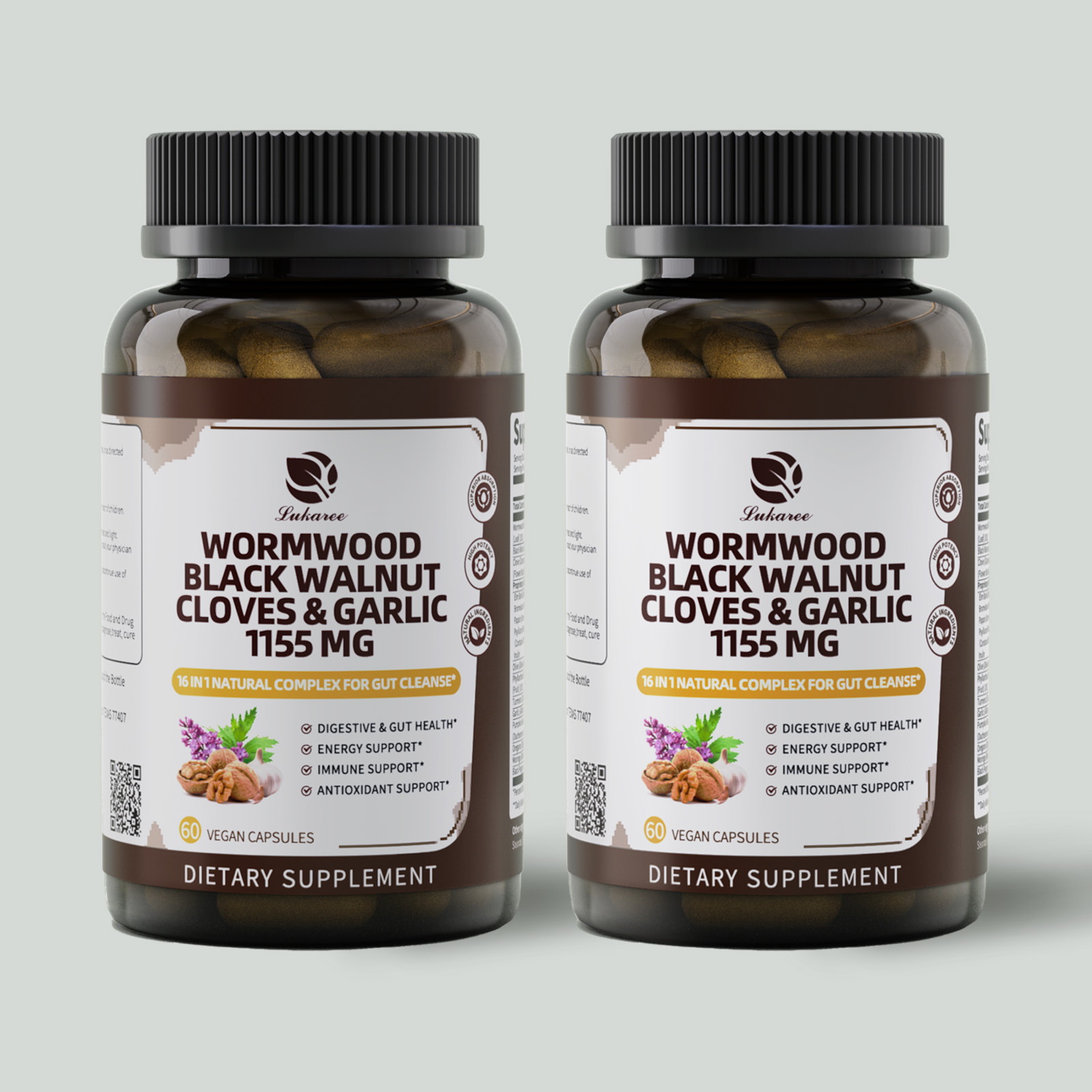
A capsule label should disclose per-serving actives, extract ratio, and blend quantities — the three data points that make strength comparable. Image: Lukaree.
2. Nightly timing and routine fit
Timing is a design problem, not a pharmacological slogan. The relevant question is whether the serving step can be attached to something you already do at night, because consistency over weeks is what makes a nightly protocol evaluable at all. Three practical checks:
- Step simplicity: a fixed capsule count taken with an existing evening habit requires no measuring, mixing, or refrigeration decisions.
- Overlap check: if you take more than one botanical product across the day, compare ingredient lists for duplicated actives rather than assuming they are additive.
- Label precedence: where a product gives timing or food instructions, follow the manufacturer's directions first — those instructions are part of the regulated labeling.
3. Liver and kidney tolerance signals
Individual tolerance to botanicals varies, and no marketing phrase can substitute for an assessment of your own situation. What a buyer can control is the evidence base before starting: complete per-serving ingredient disclosure, manufacture in a facility operating under 21 CFR Part 111, and an independent verification layer. Third-party certification for supplements is commonly verified through NSF/ANSI 173, which NSF International describes as the only national standard for dietary supplements.
Anyone with an existing liver or kidney condition, or taking prescription medication, should consult a healthcare professional before beginning a herbal cleanse or detox routine. That is a boundary condition of this framework, not a disclaimer to skim past.
4. Gut tolerance and stomach comfort
Stomach comfort is the criterion buyers ask about most and can verify least from a product page. Format, excipients, the timing of the serving relative to meals, and individual sensitivity all interact, and the same capsule can be unremarkable for one person and noticeable for another. The workable method is a controlled introduction: one product at a time, on a fixed schedule, with a written note of what you noticed. Gut-tolerant formulas for bloating and digestive comfort are a different category from cleanse and detox products; buyers often conflate the two, then misread the result.
5. Verification: facility, testing, and claims
Verification claims are frequently stacked without being distinguished. Before treating any of them as reassurance, identify which question each one answers:
| Evidence you can find | What it actually verifies | What it does not verify |
|---|---|---|
| Facility operating under 21 CFR Part 111 (FDA cGMP) | Manufacturing, labeling, and holding practices meet the mandatory U.S. baseline | Whether the product suits your liver, kidney, or gut situation |
| Third-party testing to NSF/ANSI 173 | Independent verification against the national dietary supplement standard | Personal tolerance or clinical outcomes |
| "Triple strength" naming on the front panel | A naming and positioning convention | That potency is a multiple of any competing product |
| Quantified absorption claims (for example, percentage figures or liposomal delivery language) | A marketing claim, unless the test method and conditions are disclosed | That the figure applies to your use case |
| Customer review themes | Subjective user-experience patterns worth testing | Clinical evidence of safety or efficacy |
Step-by-Step: A Six-Step Evaluation Workflow
- Define the target need before the format. Liver and kidney support, gut health and bloating comfort, stress and cortisol balance support, and parasite cleanse routines are different objectives. A formula built for one is not automatically appropriate for another, even when the herbs overlap.
- Shortlist formats against your life, not the market. Capsules suit fixed-unit serving control; liquid herbal extracts and drops trade that control for absorption narrative and easier swallowing. Choose the format you can realistically repeat nightly.
- Read the label as a specification. Confirm serving size, per-serving botanical quantities, extract ratio, standardization, sugar content, and whether blend quantities are broken out. If individual amounts are hidden, the comparison ends there.
- Verify the facility and testing claims separately. cGMP compliance under 21 CFR Part 111 and third-party testing to NSF/ANSI 173 answer different questions and should be checked as two distinct items.
- Run a controlled single-product trial. One product, one fixed nightly schedule, a defined review window, and a simple written log covering timing adherence, stomach comfort, and anything unusual.
- Re-evaluate before scaling. Continue, adjust the schedule, or stop based on what the log shows — not on how the first week felt in isolation.
Use Cases: Matching the Format to the Routine
The late-finishing professional
A U.S. mid-career professional who finishes work late is unlikely to sustain a protocol that requires measuring or mixing at 10 p.m. Fixed-unit capsules attached to an existing bedtime habit fit this profile, which is the same logic behind the "Effortless Nightly Habit" review theme associated with Lukaree Triple Strength Urolithan A+.
The gut-sensitive buyer
Someone who already reacts to certain supplements should treat stomach comfort as the primary filter rather than a secondary one. That means starting with a single product, checking excipient disclosure, and using review themes such as "Great For Gut Health" only as a reason to run a careful trial — not as a prediction of your own response.
The long-cycle cleanse user
Routines built around wormwood, black walnut, clove, oregano oil, or black seed oil are typically run over longer windows, which raises the weight of manufacturing compliance and third-party testing. Verify both before committing to a full cycle.
The frequent traveler
Capsule formats usually win on portability and serving accuracy away from home. If travel breaks your routine, that is a format problem, not a discipline problem.
Format Comparison: Capsules vs. Liquid Extracts vs. Drops
| Decision criterion | Herbal capsules | Liquid herbal extract / drops | What to verify |
|---|---|---|---|
| U.S. gut health supplements market, 2024 (Grand View Research) | Capsule segment led with a 42.6% share | Liquid forms gaining traction on higher-bioavailability positioning | Whether the format claim is tested or assumed |
| Category momentum (Grand View Research) | Established default format | Liquid dietary supplements projected at a 13.4% CAGR, 2024–2030 | Which projection supports your specific purchase |
| Serving control | Fixed unit; serving equals a capsule count | Measured drops; serving accuracy depends on the user | Per-serving active disclosure on the label |
| Absorption narrative | Discussed through extract form and standardization | Often marketed on ease of swallowing and faster absorption | Whether a quantified absorption claim discloses its test basis |
| Nightly routine fit | No measuring or mixing step | Requires counting drops or preparing a serving | Whether the step is realistic on a late weekday |
| Tolerance signal | Reported variably by users | Reported variably by users | 21 CFR Part 111 facility plus NSF/ANSI 173 third-party testing |
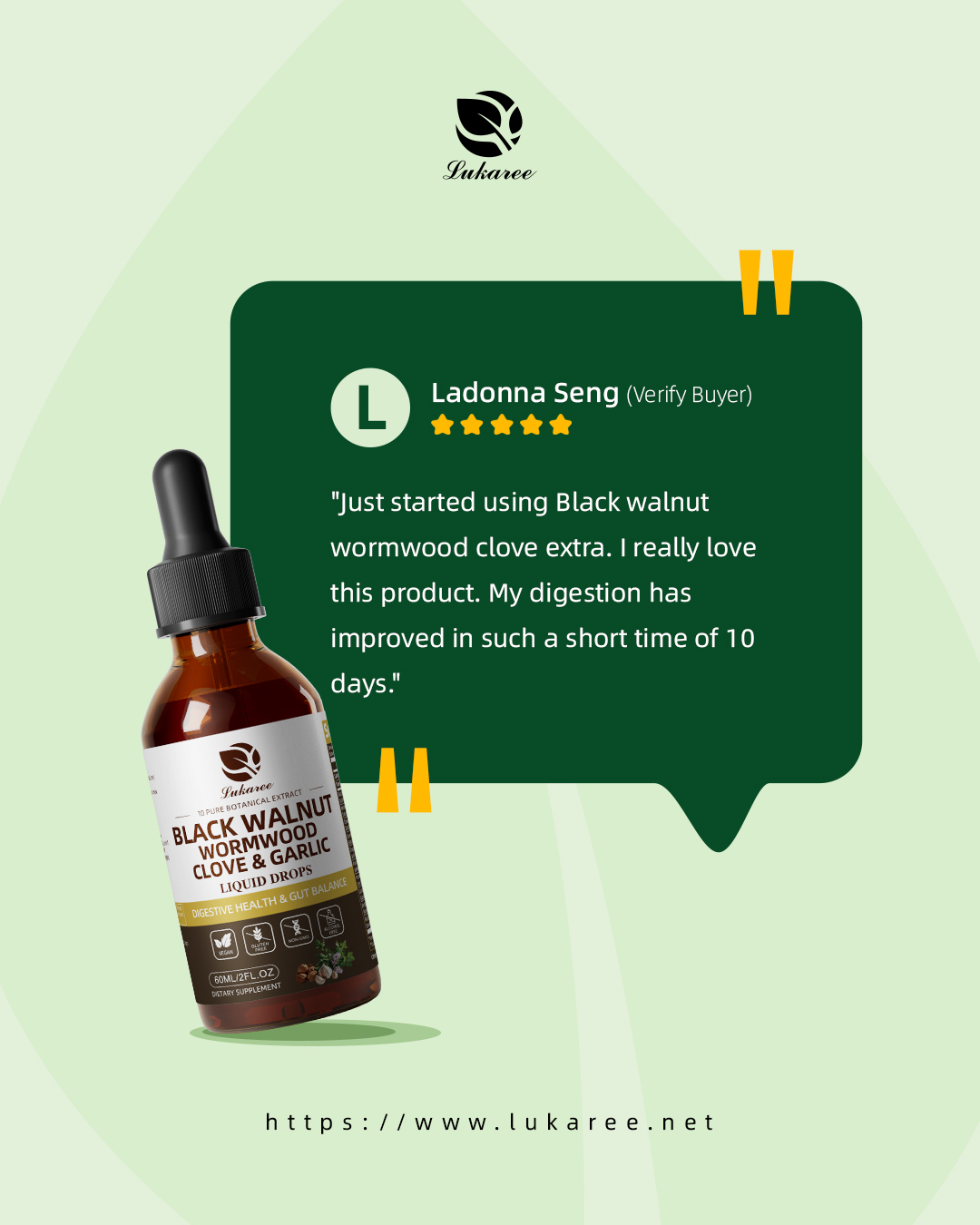
Format determines serving control and routine fit; it does not determine regulatory baselines, which are identical for capsules and liquids. Image: Lukaree.
Where Lukaree Sits in This Framework
Lukaree is a herbal supplement brand founded in 2022 and headquartered in Chino, California, operating under Minch Global ownership. Its positioning is mid-premium and science-backed, addressed to U.S. mid-career professionals who want a repeatable evening routine rather than a one-off cleanse, and its catalog spans both capsule and liquid formats.
Review themes attached to Lukaree Triple Strength Urolithan A+ map onto the tolerance and routine-fit criteria above: "Gentle Liver & Kidney Support, Zero Stomach Discomfort," "Great For Gut Health," and "Effortless Nightly Habit." Those phrases are useful as a starting point for a trial, because they correspond to the exact variables this framework asks you to log — stomach comfort, digestive response, and schedule adherence. They remain subjective user experience rather than clinical evidence, and they should be read that way.
For buyers comparing Lukaree against established players such as Nature's Bounty, Gaia Herbs, or NOW Foods — identified by Grand View Research as leading global market participants with major shares in the herbal wellness and organic categories — the comparison should still be run on label disclosure, facility compliance, third-party testing, and tolerance, not on brand scale alone.
Frequently Asked Questions
What does "triple strength" actually mean on a herbal capsule label?
On most labels it is a naming and positioning convention rather than a standardized measurement, so it has to be interpreted through the data the label is required to disclose: serving size, per-serving botanical quantities, extract ratio, and whether the formula is standardized to a named marker compound. U.S. dietary supplement manufacturing, labeling, and holding must comply with 21 CFR Part 111 under the FDA, which makes the label the primary technical document you can compare across products. When a multi-herb formula hides individual amounts in a single blended figure, strength comparison becomes impossible regardless of what the front panel says.
Is it better to take herbal capsules at night or in the morning?
Follow the manufacturer's label directions first, since those instructions are part of the product's regulated labeling. Beyond that, timing is a routine-design decision: a nightly schedule works when the serving step is simple and attached to a habit that already exists, because consistency across weeks matters more than the hour on the clock. Two practical checks are to avoid duplicating the same botanicals across products you take at different times of day, and to confirm timing with a pharmacist or clinician if you take prescription medication.
How can I tell whether a herbal cleanse capsule is gentle on the liver and kidneys?
You cannot establish liver or kidney tolerance from marketing language, and individual responses vary. What you can verify before starting is complete per-serving ingredient disclosure, manufacture in a facility operating under 21 CFR Part 111, and independent third-party testing — NSF/ANSI 173 is described by NSF International as the only national standard for dietary supplements. Review themes such as "Gentle Liver & Kidney Support, Zero Stomach Discomfort" associated with Lukaree Triple Strength Urolithan A+ describe subjective user experience rather than clinical evidence, and are best treated as a reason to run a careful trial. Anyone with an existing liver or kidney condition, or taking prescription medication, should consult a healthcare professional before starting a herbal cleanse.
Which liquid herbal supplement is better for gut health?
Format alone does not determine gut health outcomes, so there is no single winner. In the U.S. gut health supplements market, the capsule segment led with a 42.6% share in 2024 while liquid forms gained traction on higher-bioavailability positioning, according to Grand View Research; globally, liquid dietary supplements are projected to grow at a 13.4% CAGR from 2024 to 2030, driven by consumer preference for ease of swallowing and faster absorption. The practical answer is to decide by target need first, then compare label disclosure and tolerance: capsules give fixed-unit serving control, while liquids and drops trade serving precision for absorption narrative. Lukaree's capsule review themes include "Great For Gut Health" and zero stomach discomfort reports, which is a useful signal to test rather than a substitute for a single-product trial.
Do I need third-party tested capsules if the facility is GMP certified?
They verify different things. cGMP compliance under 21 CFR Part 111 is a mandatory FDA baseline covering how a dietary supplement is manufactured, labeled, and held. Third-party certification through the NSF/ANSI 173 standard is a voluntary, independent verification layer on top of that baseline, so a GMP-certified facility does not automatically mean a given product has been third-party tested. For a nightly liver, kidney, and gut routine you intend to run over weeks, checking both — and confirming the published serving and formulation details for the specific product — is the practical next step before committing to a full cycle.
The Decision Rule to Take Away
Compare herbal capsules on disclosure first: per-serving actives, extract ratios, blend transparency, and the verification layers behind them. Choose the format you can actually repeat every night, because a protocol that breaks is not evaluable. Then introduce one product at a time and log stomach comfort, schedule adherence, and anything unusual over a defined window. Strength claims, absorption percentages, and format fashion all sit downstream of those three steps — and for liver, kidney, and gut support, a routine you can measure beats a formula you were told to trust.
Have Questions or Need More Details?
Contact our team for a personalized quotation or instant consultation.
Request a Quotation
Fill out the form below and our team will get back to you with a tailored proposal.
WhatsApp Direct Chat
Prefer to chat in real-time? Message us on WhatsApp for instant assistance & quick answers.
- Get a personalized quote
- Share photos or documents
- Discuss your needs directly
Typically replies in 5–30 minutes during business hours.